Andy Hertig, 1939-2026: Rest In Peace
إِنَّا لِلَّهِ وَإِنَّا إِلَيْهِ رَاجِعُونَ
9/11 changed everything.
I knew Andy before 9/11, but not particularly well. When I first met him he was Andrew W. Hertig of ‘57; ‘31, ‘69, ‘83 (Hon.); P’83, P’86, P’88 fame - a longtime, beloved history teacher at Phillips Exeter Academy who was universally credited with having for years deftly navigated paths between teacher, dean, advisor, and friend roles and who I came to know when he taught some international students whom I knew and liked.
A scholar who drew from the Odyssey, Declaration of Independence, Civil War, and Mario Savio.
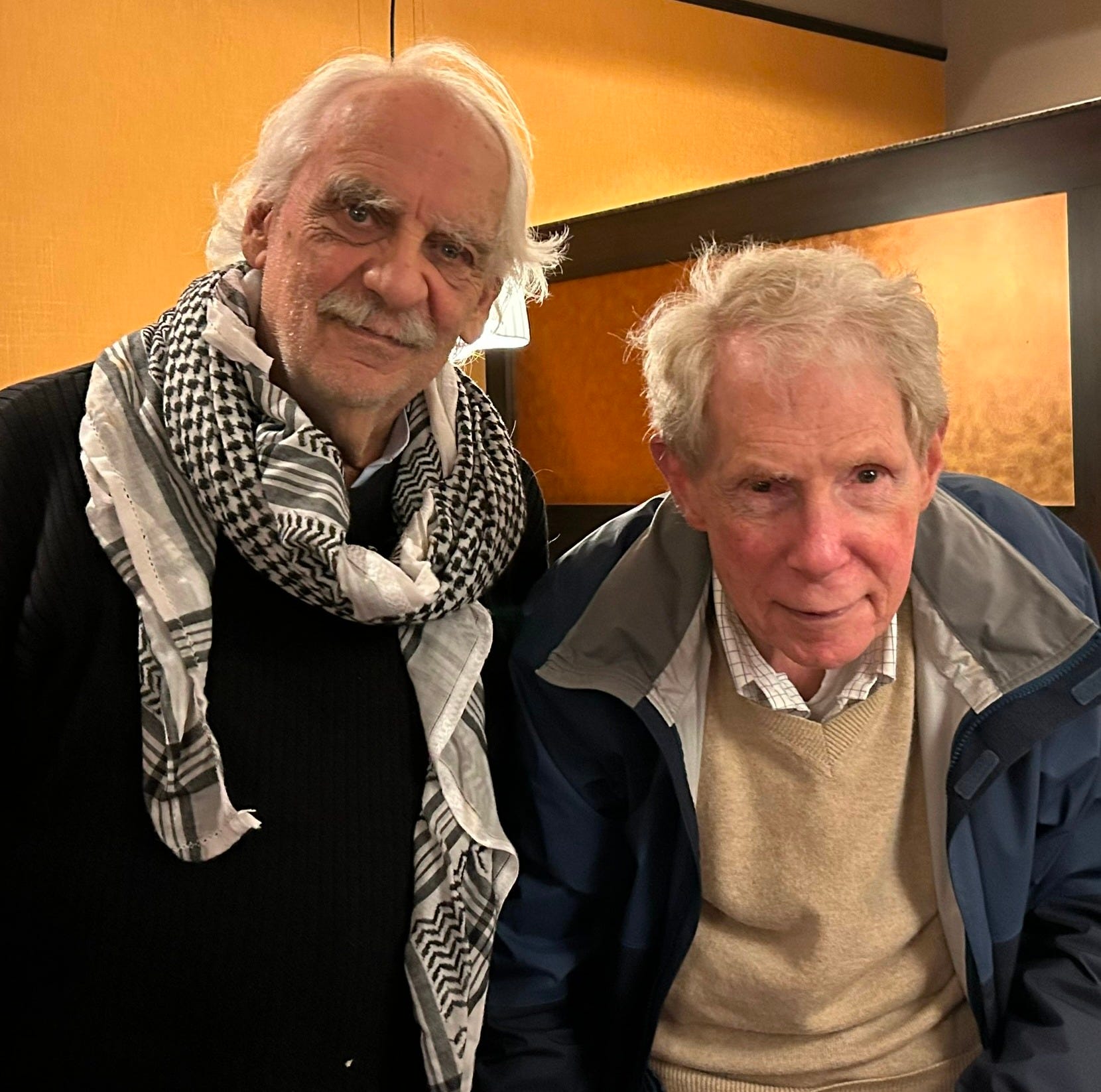
9/11 changed everything; for much of the world it was about tragedy and darkness - for the two of us it also nourished a friendship that endured a quarter-century. It began over history and was fueled by his inexhaustible curiosity, by his questions: which books should I read first, where are the traps - and ended in a hospital room some days ago where I said goodbye.
9/11 had come to Exeter at a time when there wasn’t an instructor on campus who was teaching contemporary middle east history. The previous ME history instructor had died weeks before, in June, and the school didn’t have someone to replace them at the time of the 9/11 attacks.
Andy was to be its new instructor - to begin in September 2002 - and he asked for my help to get ready ...
We began ....
Read Israel’s new historians Ilan Pappé, Tom Segev, Avi Shlaim and Benny Morris, I suggested. Forget whatever you saw in the movie Exodus but do watch the Battle of Algiers. Forget whatever you have come to believe about Oslo. Read George Antonius’ The Arab Awakening and David Hirst’s The Gun and the Olive Branch: The Roots of Violence in the Middle East. Read Edward Said, Walid Khalidi, Rashid Khalidi.
Read Franz Fanon; remember that there is nothing in the region untouched by colonialism and imperialism - it’s not called a postcolonial age for nothing.
Finally, I told Andy, don’t count on the NY Times (he was wedded to the Times - it took forever to divorce him from Tom Friedman) or The Washington Post - or me - to tell you the truth: check it all out for yourself.
As Andy read I also reread what I was suggesting to him. We talked. We liked each other. We didn’t suffer fools easily.
I lent him material from my library.
He never stopped pushing back. He asked amazing questions - often several he had written on a sheet of paper - and he understood that the geopolitics of lands I loved and the cultural and political representation of lands we shared post 9/11 were as transformative to us in our Exeter NH comforts as it was for refugees in Palestine.
I remember a moment when Andy, together with other instructors and deans, convinced the school to host ReOrientalism on October19, 2003 - just three weeks after Edward Said died - a program centered on addressing stereotypes and misconceptions about Arabs and Islam both in the Middle East and in the West.
I remember it well for the moment when during her performance actress and author Najla Said (Edward’s daughter) called out “FREE PALESTINE.”
I can’t imagine that happening in Exeter today.
Not only did generations of students benefit from Andy’s efforts but I did as well. His questions never ceased - sadly, he never accepted something just because I said it!!!
Andy never stopped reading, learning, asking questions. In 2009, after being gifted Destiny Disrupted: A History of the World Through Islamic Eyes by Afghan-American author Tamim Ansary, he said he found the idea of looking at global history from a non-Western perspective challenging but helpful.
He took students to the Camden Conference in Maine when there were programs touching the Middle East and went with me to MIT for programs and dinner on the Middle East.
This year, when he left to spend the summer in Gloucester with his family, I gave him a copy of Frankopan’s The Silk Roads: A New History of the World, thinking that he might find something of interest in its well-over 700 pages.
I learned yesterday that because the book was printed with small type he downloaded it on Kindle and then read it all before he returned to Exeter Labor Day Weekend!
He never stopped.
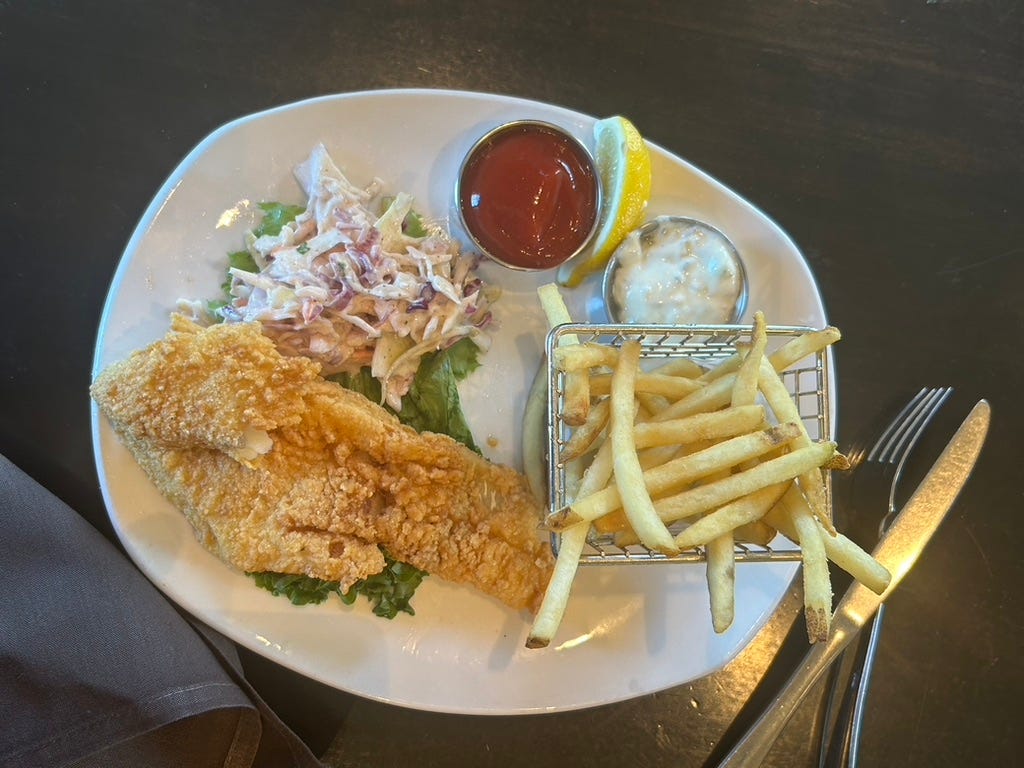
The last few years we tried - other than during summers - to have dinner together - always at 18:30, always at the 110 Grill in Stratham, always where he would order the same entrée - fish and chips, followed by coffee.
When he didn’t feel like going out I would pick up lunch for us from Me & Ollie’s and bring it to his house where he laid it out on a properly-set table with place mats and napkins.
The last time we did that there was a strange wooden object on the hallway floor, leaning against the wall. I asked him what it was and he said it was a bagatelle, a game board that belonged to this mother - a sort of pre-pinball amusement for children.
Bagatelle: I’ll never forget where I learned that word.
I loved Andy. He was among the most curious, intellectually-rigorous, unflappable, generous person and story-teller I’ve ever known, and i am so thankful that his family gave me the time to say a final good-bye.
At our last dinner - two weeks ago tomorrow - Andy was a bit more subdued than usual. He reminisced a lot and he told me that he was going to die this year. I told him he couldn’t, that I wasn’t ready for him to die, that we still had too many stories to tell each other.
I wasn’t ready.
Salamaat,
Robert